Short answer: if your board has old fuse wire, no RCD protection, a plastic case, or keeps tripping, it’s worth getting an electrician to look at it. If you smell burning or see scorch marks, switch off at the main switch if it’s safe to and call an electrician straight away.
1. It still has rewireable fuses
If you open the cover and see pull-out fuse carriers with wire in them, the board is decades old. Those fuses are slow to react, easy to rewire with the wrong size wire, and give no protection against electric shock. This is the most common reason we replace boards.
2. There’s no RCD protection
An RCD cuts the power in a fraction of a second if current leaks to earth, for example through a person. Modern boards protect almost every circuit this way. Look for a switch with a “T” or “Test” button. If there isn’t one, your circuits are unprotected against electric shock.
3. It’s a plastic consumer unit
Since 2016, the wiring regulations have required consumer units in homes to be made of non-combustible material, usually metal. Older plastic units aren’t automatically dangerous, but if yours is showing other issues, a replacement brings it up to the current standard.
4. It keeps tripping
Occasional trips usually point to a faulty appliance. Frequent trips, or one that won’t reset, can mean a fault on a circuit, too many circuits on one RCD, or an ageing board. Unplug everything on that circuit and try again. If it still trips, call an electrician.
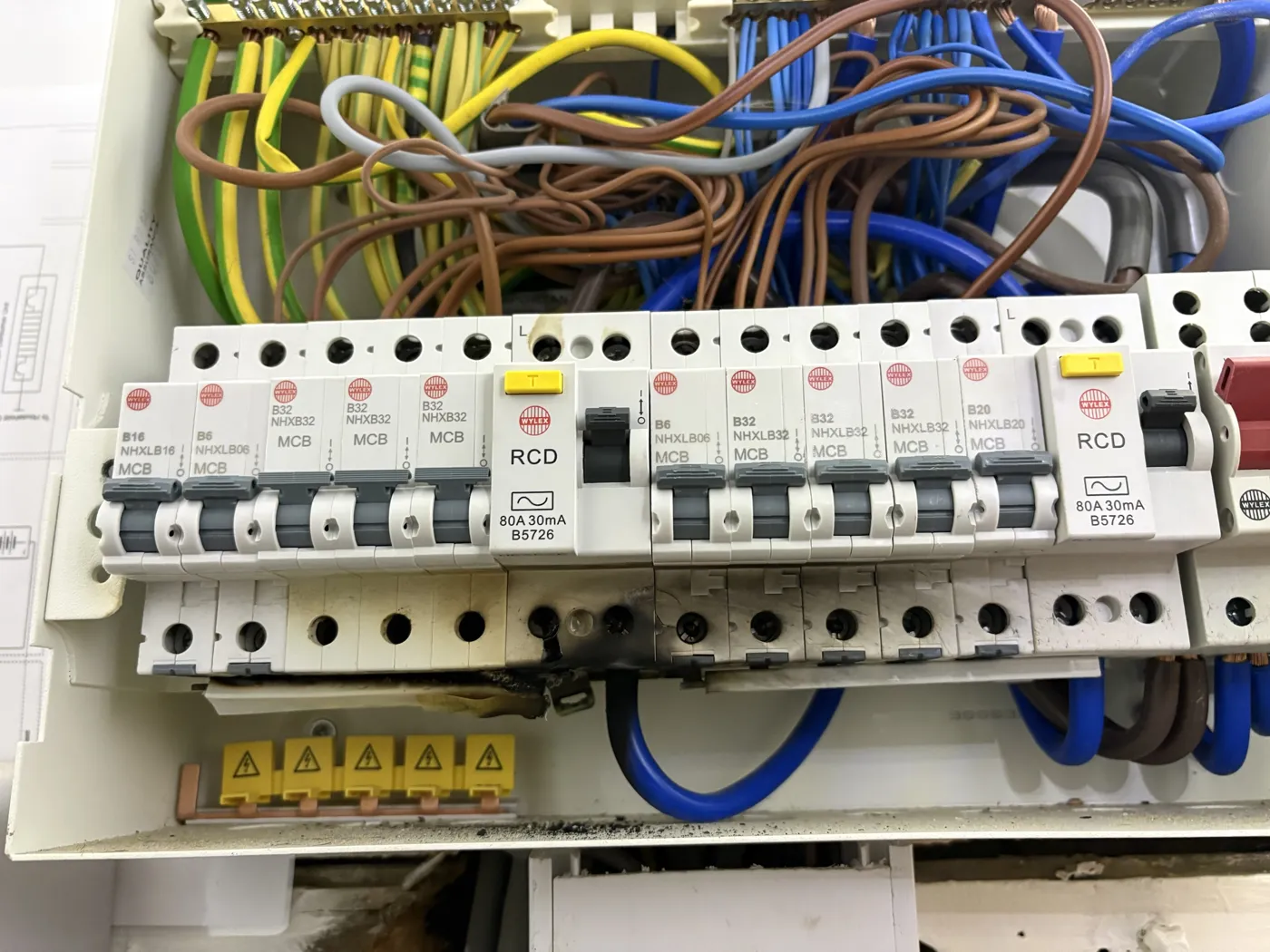
5. Burning smells, buzzing or scorch marks
These are warning signs of overheating connections. Don’t ignore them. Switch off at the main switch if it’s safe to and get it checked the same day. In Leeds we offer a 24/7 emergency call-out.
6. You’re adding something big
An EV charger, electric shower, heat pump or kitchen extension all need a spare, correctly protected circuit. If your board is full or old, it’s often better value to upgrade it at the same time. See what affects the cost of an EV charger.
7. Your EICR flagged it
An Electrical Installation Condition Report may give codes such as C2 (potentially dangerous) against the board. If you’re a landlord, you must put that right within 28 days. Landlord EICR rules explained.
What happens on a board change
- We check the existing circuits before we start, so faults are found before the new board goes in
- A new metal consumer unit with RCBO or RCD protection is fitted and labelled
- Every circuit is tested and you get an electrical installation certificate
- We notify building control under Part P for you
Send us a photo of your board and we’ll give you a fixed price.